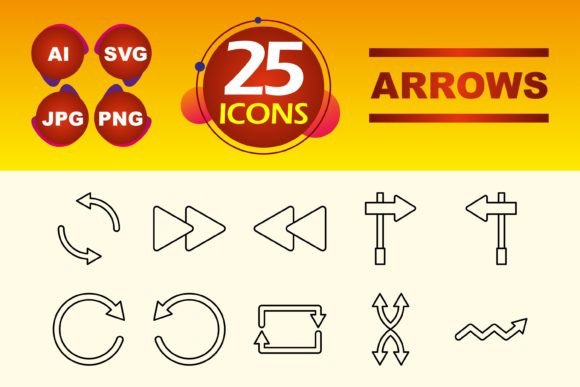
Arrows Icons: Enhancing Visual Communication in Your Projects
Arrows Icons are a versatile set of 10 icons designed in a clean and minimalistic Line Icon style. These icons can be seamlessly integrated into various digital projects, from mobile apps and websites to presentations and infographics. Whether you're a professional, creator, or entrepreneur, these icons offer a simple yet effective way to enhance visual communication and guide user interaction.
Understanding the Role of Arrows Icons in Visual Design
In the realm of visual design, Arrows Icons serve as essential tools for directing attention and indicating flow. They are particularly useful in creating intuitive user interfaces, where clear navigation is crucial. For instance, in a mobile app, arrows can guide users through different sections, making the experience more seamless and user-friendly.
Integration with Other Design Elements
When integrating Arrows Icons into your project, consider how they interact with other design elements. The line icon style of these arrows ensures they blend well with both modern and minimalist designs. Use them alongside other icons, text, and images to create a cohesive and visually appealing layout. For example, in a website template, you might use arrows to highlight key features or to direct users to important sections like "Contact Us" or "About Us."
Practical Implementation Tips for Using Arrows Icons
To effectively use Arrows Icons in your projects, it's important to plan their placement and purpose. Here are some practical tips:
- Define the Purpose: Before adding arrows, determine what each arrow will represent. Are they for navigation, highlighting, or guiding a process? Clarity in purpose will make your design more effective.
- Consistency is Key: Use the same style of arrows throughout your project to maintain consistency. This helps in building a familiar and reliable user experience.
- Test for Usability: After placing the arrows, test the design with a small group of users to ensure that the arrows are serving their intended purpose. Feedback can help you make necessary adjustments.
Workflow Examples and Use Cases
Here are a few examples of how Arrows Icons can be used in different workflows:
- Mobile App Development: Use arrows to indicate the flow of screens, such as moving from a login page to the main dashboard. This helps in creating an intuitive and smooth user journey.
- Website Design: Incorporate arrows to direct users to call-to-action buttons, such as "Sign Up" or "Learn More." This can significantly improve conversion rates by making the desired actions more prominent.
- Presentation Slides: In a presentation, arrows can be used to show the progression of ideas or to highlight key points. This makes the content more engaging and easier to follow.
- Infographics: Arrows are perfect for showing relationships and sequences in infographics. They help in illustrating complex data and processes in a clear and understandable manner.
File Types and Compatibility
The Arrows Icons set includes multiple file types to cater to different needs:
- AI (Adobe Illustrator): Ideal for vector editing, allowing you to scale the icons without losing quality.
- JPG: Suitable for web and print, providing a high-quality image format.
- PNG: Offers transparency, making it easy to overlay on any background.
- SVG: Scalable Vector Graphics, perfect for web use as they can be resized without degrading in quality.
These file types ensure that the icons are compatible with a wide range of design tools and platforms, making it easy to integrate them into your existing workflow.
Long-Term Use and Quality Control
For long-term use, it's important to maintain the quality and relevance of Arrows Icons. Regularly review and update the icons as needed, especially if there are changes in your design or branding. Consistent use and regular updates will help in maintaining a professional and polished look across all your projects.
By following these guidelines and best practices, you can effectively integrate Arrows Icons into your projects, enhancing both the functionality and aesthetics of your designs. Whether you're working on a mobile app, website, or presentation, these icons provide a simple yet powerful way to guide and engage your audience.